Food Waste Panel at the Conference OTB4
RESOURCE team organized a panel to rethink Food Waste
Daniel Sosna, Petr Jehlička, and Maike Melles applied to organise a panel entitled Exploring Food Waste from the Epistemic Peripheries at the Opening the Bin 4 conference in Le Mans. The original abstract can be found here:
https://otb4.sciencesconf.org/resource/page/id/3
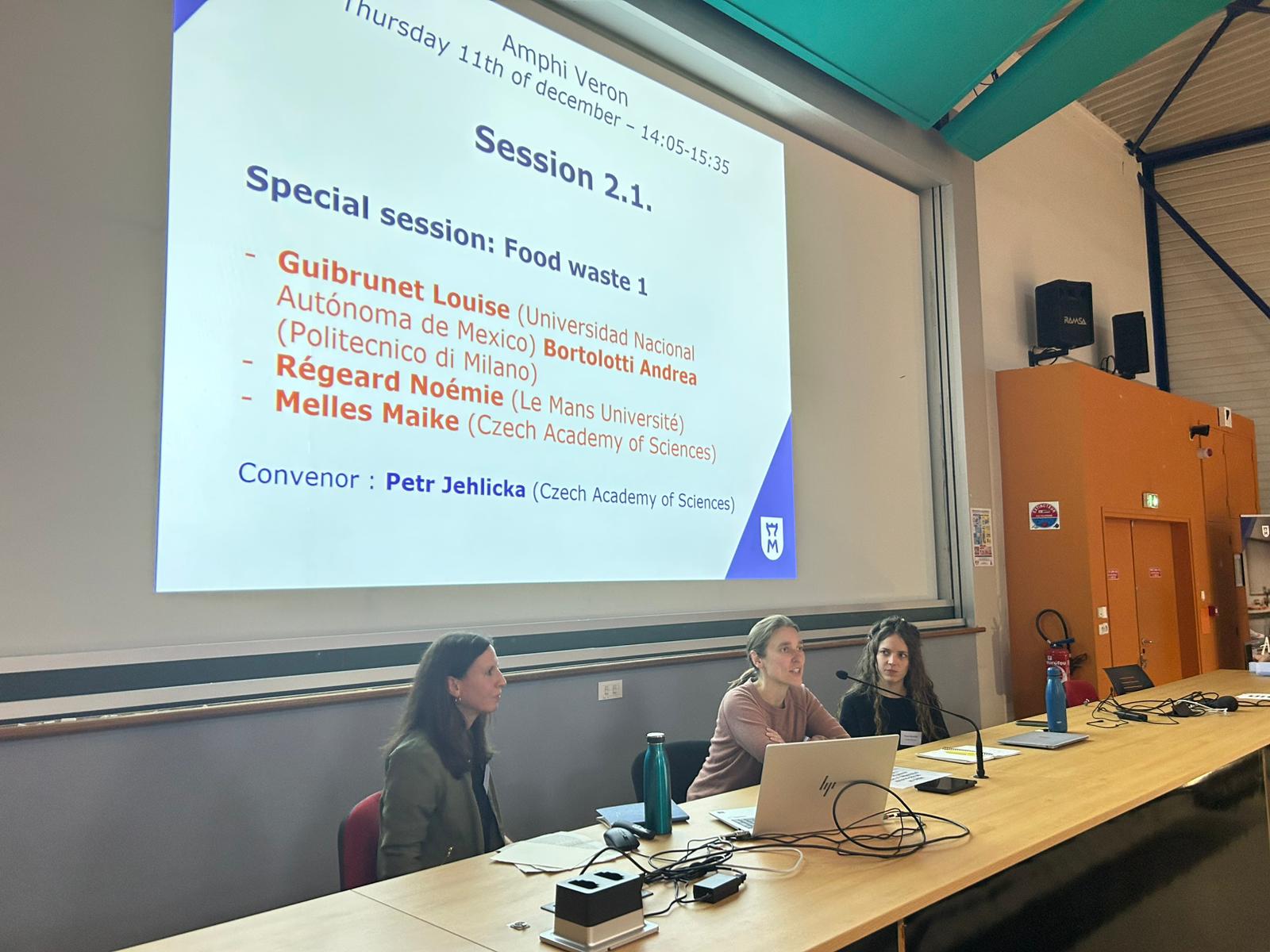
The panel was divided into two special sessions entitled Food Waste 1 and 2. We were fortunate to attract several excellent colleagues from various parts of the world who contributed to the panel. The first session started with Louise Guibrunet and Andrea Bortolotti's paper about diverse ways of dealing with food surplus in Mexico city. Drawing upon the concept of urban metabolism, the authors showed the relationship between the spatial nature of everyday practices and the materiality of organic matter. Additionally, the authors highlighted the 'silent sustainable' practices of actors who did not originally intend to be sustainable. The session continued with Noémie Régeard's presentation concerning her research in Brazzaville, Congo. Following the interest in the sociomaterial processes of urban production, Régeard depicted a vivid picture of frictions between the traditional agricultural practices and new forms of circular imagination coming to the country along with the developmental projects from the outside. The last paper in the first session was Maike Melles' exploration of food-sharing cupboards and community fridges in the Netherlands. Melles highlighted practices of sharing and solidarity that included not only food but also other objects. Her paper showed a considerable diversity in people's goals and interpretations of practices surrounding these social institutions, which represent alternatives to the dominant model of food banks.
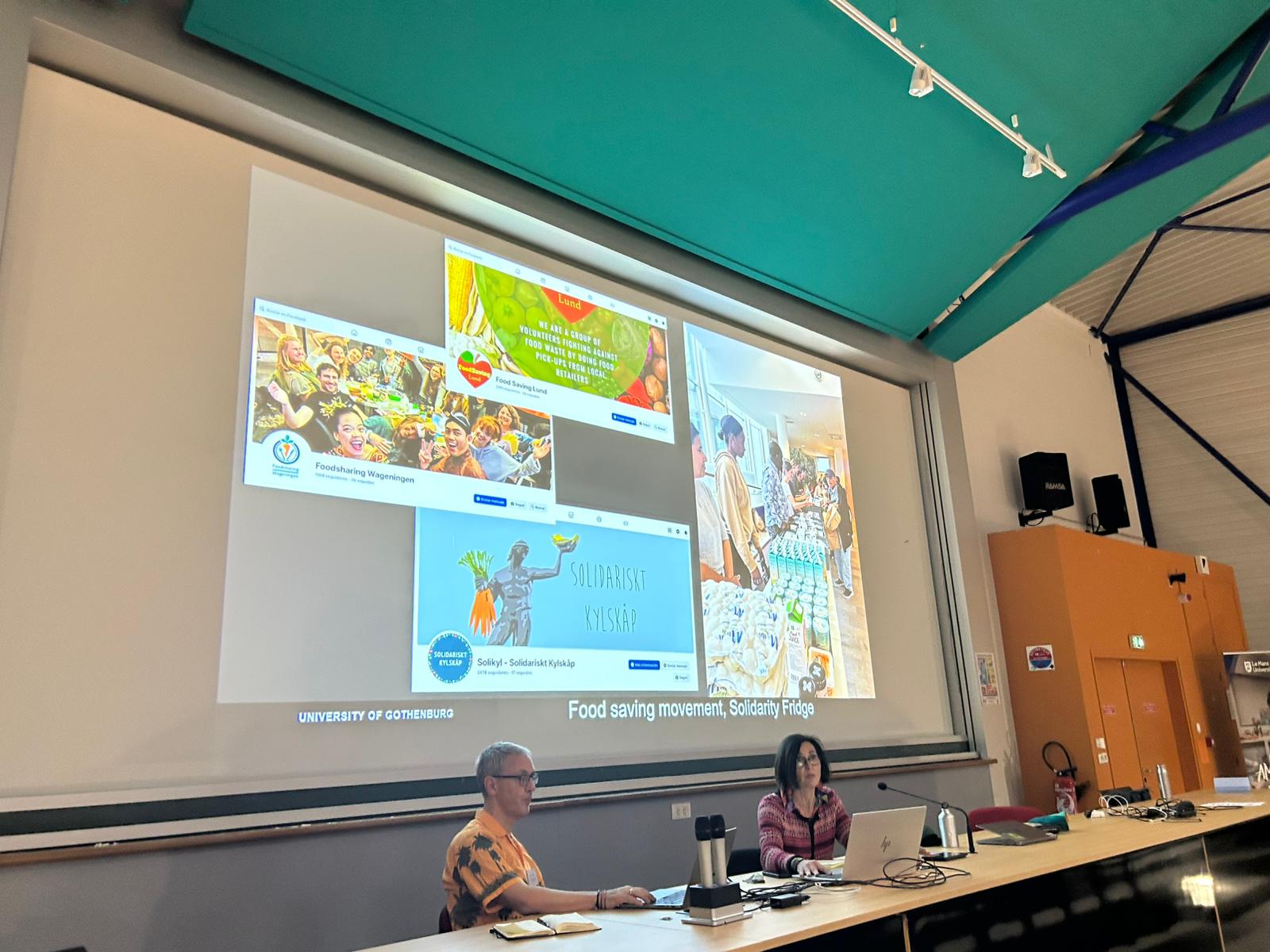
The second session began with Lilyana Yankova's exploration of discarded organic matter in Paris. By putting composting at the centre of her research, Yankova calls for reimagining this practice 'beyond the bin.' It means to view it as a space for commoning and knowledge sharing. In Yankova's view, composting is a potent local practice offering opportunities for inclusion and education of children. Nawel Ayadi and Christine Gonzales argued that in France, composting is a relatively underdeveloped form of managing food surplus. Public authorities, therefore, seek to motivate citizens to embrace composting behaviour. The researchers studied the perception of composting by individuals. The results of their survey reveal, among other things, that both composters and non-composters associate composting with recycling, and that women tend to perceive composting as a daily ‘gesture’ more often than men. In their presentation, María José Zapata Campos and Patrik Zapata asked whether food-saving grassroots initiatives in the urban context empower alternatives—or serve as stopgaps within an unsustainable system. As the spotlight of both public policies and academic research on efforts to reduce food waste is on the ‘consumer end’, waste management practices at the ‘upstream’ parts of the food chain receive limited attention. To shed more light on this conundrum, the authors analyse local waste prevention policies, food waste laws and proposals, and the everyday practices of food rescuing. Finally, Petr Jehlička presented a collective paper (with Evelien de Hoop, Daniel Sosna, Esther Veen, and Lucie Sovová) focusing on the epistemic dimension of studies concerning household food waste. The research collective challenged the stereotypical thinking about food waste, which often comes from a limited number of countries and social contexts. The collective critically interrogated the assumption that humans are inherently wasteful. Instead, they highlighted frugal practices in Czechia, which prevent food wastage. The collective encouraged a shift towards researching frugal practices in the 'epistemic peripheries,' which can serve as a source of inspiration elsewhere.