
Food Waste Awareness Day: Rethinking Awareness
Food Waste Awareness Day invites us to rethink what kind of awareness we should cultivate
The International Day of Awareness of Food Loss and Waste invites the usual repertoire of responses: better labelling, smarter apps, slick technologies, or better informed consumers. Our collective research in Czechia and the Netherlands suggests a different starting point—one that has been operating quietly, and largely unrecognised, in households all along.
Everyday practices of care and resource management—cooking wisely, sharing leftovers, feeding food scraps to animals, composting—already contribute to food waste prevention. Crucially, these practices are rarely motivated by environmental concerns. They represent habits, forms of care, and expressions of a dislike of wastefulness. This reframes the actor of prevention: not a “consumer” to be educated, but a carer already embedded in social practices. Grassroots initiatives such as neighbourhood cupboards and community fridges extend this logic outward, turning household thriftiness into shared infrastructure for surplus redistribution.
This picture, however, should not be overstated. Food loss, which occurs upstream in the supply chain before food ever reaches a household, receives far less public attention than consumer behaviour does. Any account that galvanises attention to households and their dynamics risks eclipsing this earlier, structurally significant source of waste. In other words, a focus on households alone can be a pitfall that diverts attention from the main systemic causes of wastefulness embedded in market logic, unlimited growth, and excessive choice.
A further shift in perspective addresses the entanglement of food discard with production. Household food production—gardening, preserving, small-scale cultivation—is closely related to lower per capita food waste, and recent research extends this connection to participation in community-supported agriculture. This invites a horizontal rather than linear understanding of the food system: a network combining market and non-market sources, intra- and inter-household sharing, and mutual exchange, rather than a single chain running from field to bin. Direct, hands-on engagement with food—growing it, processing it, developing the skill to use it well—appears to generate a heightened reluctance to let it go to waste.
Public campaigns tend to assume that food waste persists because people lack information. This assumption obscures the deeper conditions that shape resource use: social relationships and practices that unfold without much reflection. Frugal practices are not simply chosen; they are enabled or constrained by circumstances that education alone cannot address.
Taken together, these insights challenge the interventions based on the behavioural change of consumers. They emphasize access to land and gardens, support for community food-growing and sharing schemes, and attention to the social and material conditions and infrastructures that make frugal practices possible in the first place. Preventing food waste, in this view, is less about persuading individuals to change their consumption and more about sustaining—and extending—the quiet, often invisible practices and networks through which households already manage food carefully.

Figure 1. Surplus cherry juice after cherry processing. Now the juice is ready to be frozen for future consumption.

Figure 2. A neighborhood collection of old bread and rolls for the fish.
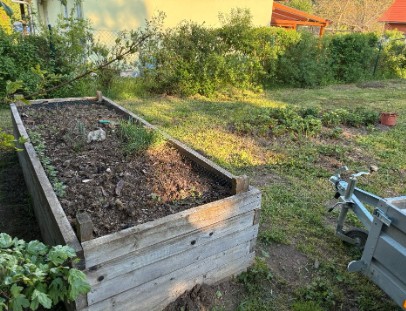
Figure 3. Growing food in the garden.